

John is his name - God is Gracious, God shows Mercy
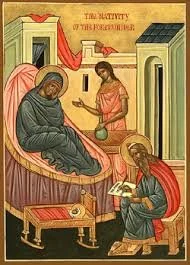
John has already been born, but Zechariah still cannot speak, unable even to join the pious conversations taking place in preparation for the circumcision. What a tremendous spiritual battle must have raged in the heart of this priest. However, unlike when the joyful news of the son's birth was revealed to him, he now remains firmly on the promise and writes on the tablet: John will be his name. Zechariah puts a final seal on it, strengthening faith by showing complete confidence in God's plans. Only now can we see that he has become a deeply believing man, from an unbeliever. His tongue is loosed, his heart opens, and he begins to praise God. Zechariah's attitude arouses astonishment in those present, which turns into fear. We can see this whenever God's hand touches a person. Then he experiences all the majesty of God's grace and the holiness of his presence (cf. Gen 3:10; Ex 33:20).
What a great punishment God imposed on Zechariah for his unbelief, and how that punishment became a blessing. It had to be so for God's power and His grace to be fully revealed. The loss of speech was a rebuke and humiliation for Zechariah, and now it awakens his faith and strengthens his trust in God. The moment the priest regains speech is the moment of releasing gratitude and praising God not only for good things but also for what is connected with suffering.
It is worth noting that the name John means "God is gracious" and "God has shown mercy." Elizabeth and Zacharias must admit that no one in their family bears that name, which may also indicate that the full effect of grace has not yet been felt in that family. The evangelist describes, in a very simple way, the time before the Incarnation of the Son of God, when, as we sing in Advent, heaven was closed. At the same time, he wants to lead us into the new time of salvation that began with Jesus' coming into the world. John the Baptist is a precursor of that time. He acts in the name of the one who will express himself most beautifully in the person of Jesus, announcing that in him all the prophecies of the Old Testament are being fulfilled. Throughout Jesus' work of salvation, the name John can be written: "God is Gracious, God Has Shown Mercy."
The name John is a summary of several biblical stories about the gift of motherhood that God gave to a childless woman. "The LORD took note of Sarah," begins the story in the Book of Genesis about the birth of Isaac (cf. Gen 2:1). "She conceived and bore a son, and she said, “God has removed my disgrace.” (cf. Gen 30:22) - We read a few chapters later about the birth of Joseph from the barren Rachel. The birth of Samuel is described in a similar tone - God accepted the prayers of a childless Hannah, took pity on her, and showed her kindness (cf. 1 Sam 1:19f). The names of all four of the children mentioned here refer to their mothers' previous infertility. Sarah called her son Isaac because "the Lord gave me a reason to laugh" because she became a mother in her old age (cf. Genesis 21:6); for the name Isaac means "he laughed". In turn, the name Joseph means: "May the LORD add another son for me!" (cf. Gen. 30:24) - and it perfectly reflects the experience of a woman who, after many years of waiting, was finally given a child. On the other hand, the name Samuel, which was given to her son by Hannah, means "God heard".
However, only the name John captures the very essence of these subsequent stories, which tell of the great men of God, who, in human terms, seemed as if they should not have been born at all, yet were God's gift to God's people. As I said, the name John means "God is Gracious, God Has Shown Mercy."
This name perfectly shows that God's gifts are always beyond our understanding. It also perfectly expressed what his mother lived through: "How kind God is to me that I had a child in my old age." But the name John was meant to express incomparably more. After all, John was to proclaim the mercy of God, who gave us His own Son. John was to be His Forerunner, preparing the way for His coming.
The presence of God is not a passive observation of reality but an active force that changes the course of history. This is fully revealed when the promise is fulfilled that a barren woman in her old age will conceive and bear a son. Elizabeth can already anticipate all that will be given to all through Christ's passion and resurrection, and she participates in the work of grace, becoming a mother.
Thanks to God's action, neighbors and relatives may come to see that this gift of a child is a way of showing His Almighty Mercy. For an Israelite, the child was the fruit of God's blessing, and when we add that a barren woman gives birth, we see God's gracious intervention.
The grace that God bestowed on Zechariah and Elizabeth applies not only to them but also to others, and through their friends, it even spreads joy to everyone. Overall, the theme of joy appears frequently in the Gospels. We will soon hear the shepherds proclaim the joy of Christmas, or the Magi from the East, who are filled with great joy as they come to the birthplace of Jesus. In this event, we feel a sense of a prophetic moment, and at the same time, we see a testimony. Believers, by themselves, do not have the power to testify of God's action, and their faith is often shaken. God does not always act directly or alone; hence, we see that God calls humanity to cooperate. The people of God not only receive salvation from God, but human cooperation is also an expression of God's mercy. God comes to people not in the loud voice of a punishing angel, but in the soft voice of the prophet foretelling.
John the Baptist was a most special gift to all of us. He is the only prophet tasked with directly preparing God's people to receive the Messiah. The Lord Jesus Himself said that no prophet greater than he had been born (cf. Matthew 11:11). For centuries, the Church has believed that John the Baptist was freed from original sin already in his mother's womb, namely when his mother Elizabeth met the pregnant Mary, who carried the Son of God. Therefore, John is the only saint whose birth is commemorated by a liturgical feast, just as the birth of Jesus and the Holy Mother.
"God is gracious, God has shown mercy." That is enough.
Until Tomorrow
fr. george